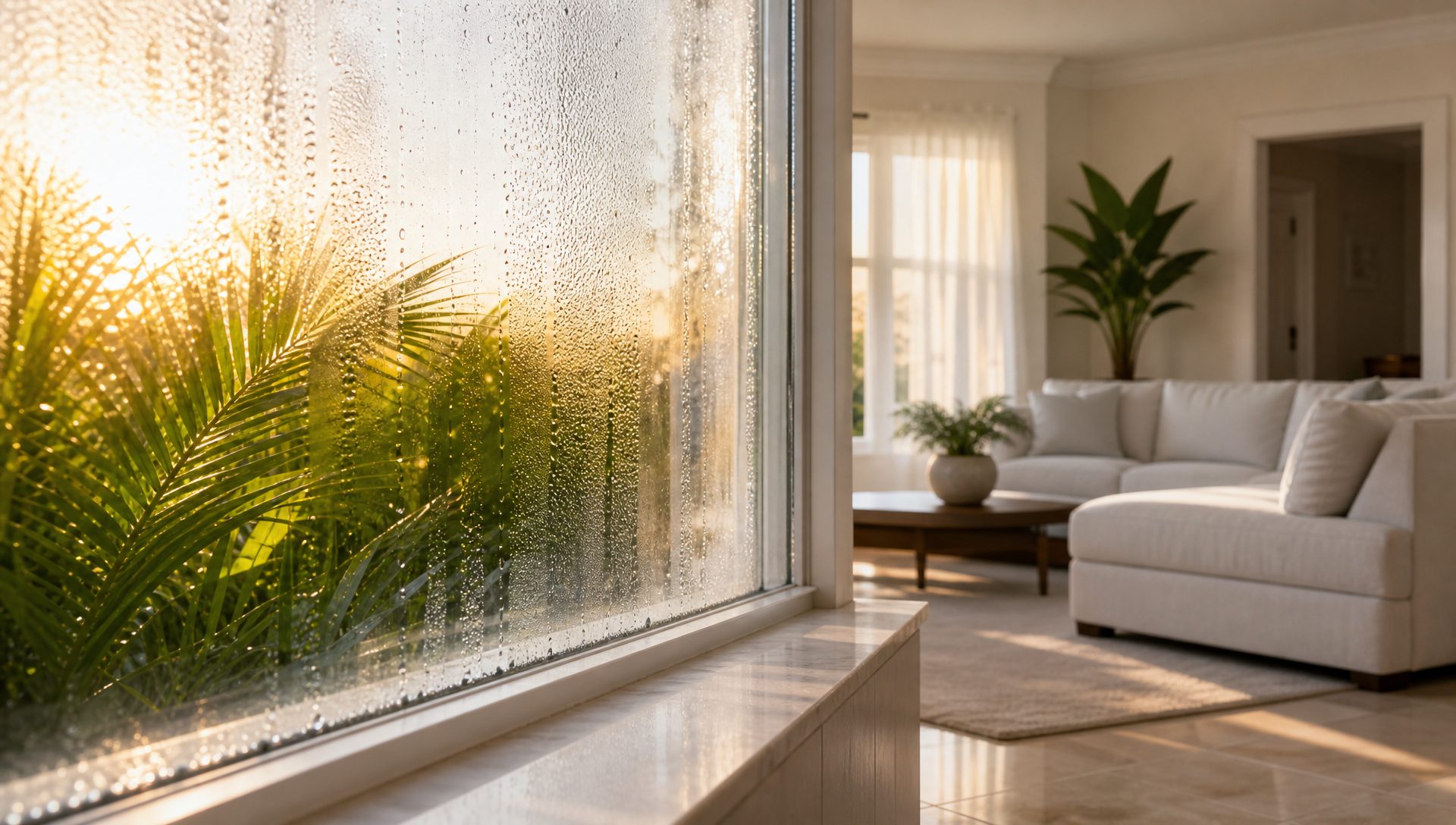
If you live in Tampa, you already know the feeling of stepping outside in July. What you might not think about is what all that moisture is doing inside your home.
According to NOAA climate data for Tampa, relative humidity here averages close to 90 percent on summer mornings, with dew points hovering around 75 degrees in July and August. Your air conditioner fights hard, but humidity still finds its way into bathrooms, closets, grout lines, and the carpet padding under your feet.
That moisture is not just uncomfortable. It changes what “clean” means in a Tampa home.
What humidity does to your house
Mold and mildew move fast. The EPA recommends keeping indoor humidity below 60 percent, ideally between 30 and 50 percent. The same guide notes that drying wet or damp areas within 24 to 48 hours usually prevents mold from growing. In a Tampa summer, a damp bath mat, a slow leak under the sink, or a poorly ventilated laundry room can cross that line before the weekend.
Dust mites thrive here. The American College of Allergy, Asthma and Immunology notes that dust mites prefer 70 to 80 percent humidity and temperatures near 70 degrees or warmer, and they die when humidity falls below 50 percent. Tampa summers are basically a dust mite resort. They settle into bedding, upholstery, and carpet, and their droppings are a common allergy trigger.
Grime sticks harder. Humid air makes dust cling to surfaces instead of staying loose, which is why ceiling fan blades, baseboards, and window sills in Florida homes build up a sticky film that a quick dusting will not remove.
The routine that fights back
Day to day, small habits help: run bathroom exhaust fans during and after showers, keep the AC set to a consistent temperature, fix leaks quickly, and let a dehumidifier handle problem rooms.
But habits only slow the buildup. A few times a year, a Tampa home needs a reset that reaches the places humidity actually attacks:
- Bathroom tile and grout, where mildew roots in
- Baseboards, vents, and ceiling fans, where sticky dust films collect
- Behind and under appliances, where moisture and crumbs meet
- Upholstery and carpets, where dust mites concentrate
- Window tracks and sills, where condensation gathers
That is exactly what a professional Deep Cleaning covers. It is not a fancier version of tidying up. It is a different job: detail work on the surfaces that regular cleaning passes over, done systematically, room by room.
If allergies are your main concern, pairing a deep clean with professional Carpet Cleaning hits the two biggest dust mite reservoirs in the house at once.
How often should Tampa homes deep clean?
There is no single magic number, but the humid season makes a difference. Many of our clients schedule a deep clean at the start of summer and another in the fall, with Standard Cleaning visits keeping things maintained in between. Homes with pets, allergies, or kids usually benefit from more frequent resets.
Start with a deep clean, keep it clean for less
If you have been putting off that first deep clean, this is a good time: enroll in recurring cleaning service and get 50 percent off your initial deep clean, with maximum savings of 150 dollars. A minimum of two completed recurring cleanings is required, and if recurring service is canceled before the second cleaning, the discounted amount is charged to the final invoice. The offer applies to homes in average deep clean condition and cannot be combined with other promotions.
Get a free quote by booking online or call us at 813.922.2110. We will help you figure out what your home actually needs before you spend a dollar.
Lightning Cleaning Tampa provides Standard Cleaning, Deep Cleaning, Carpet Cleaning, Move In / Move Out Cleaning, Airbnb Cleaning, Post Construction Cleaning, and Commercial Cleaning across the Tampa Bay area.